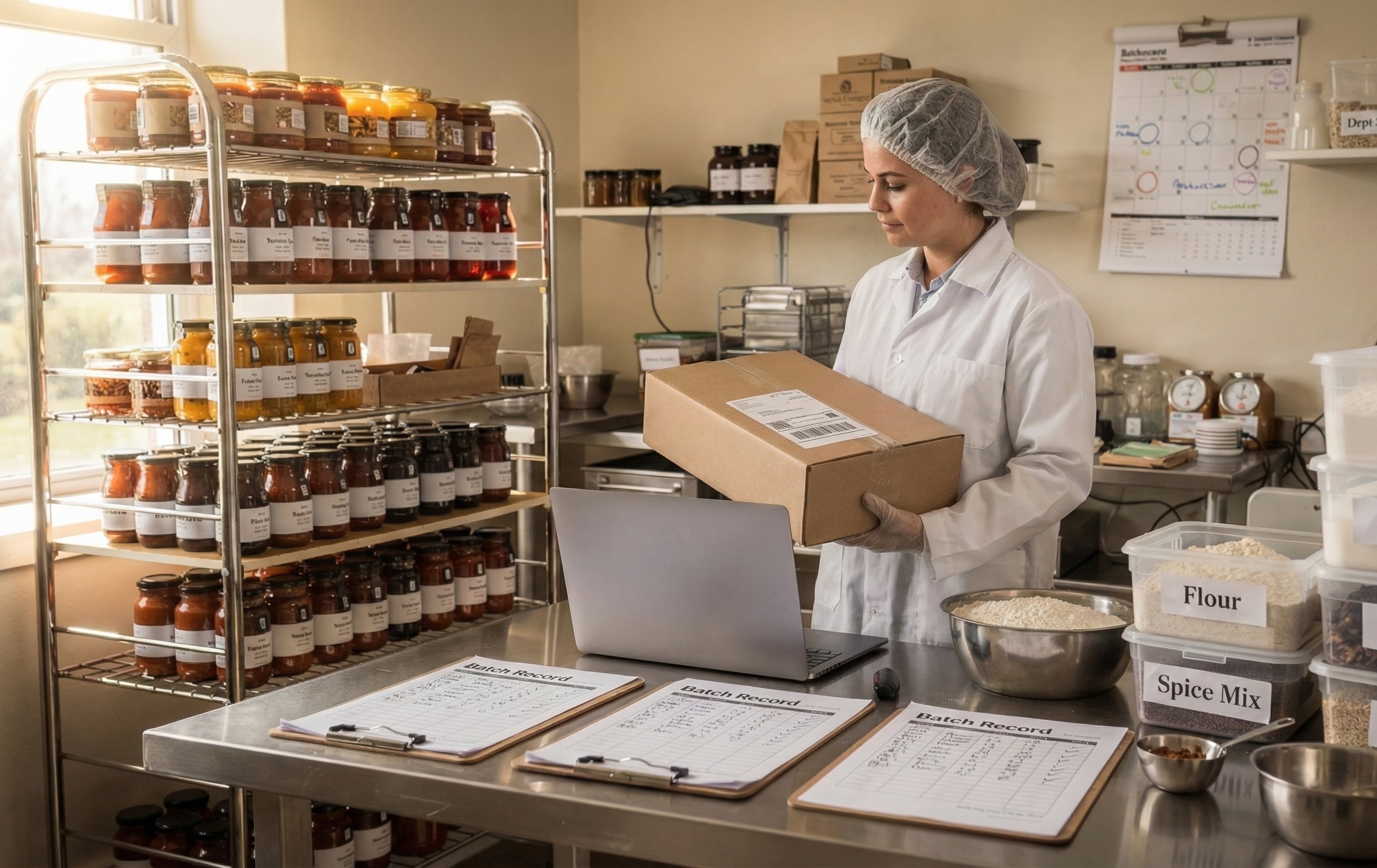
Spreadsheets and paper work until they don't. A missed formula, a late ingredient, a label mix up, suddenly you are babysitting cells instead of building product.
Good news, you do not need to reinvent how you work to plan smarter. With a few small changes and better data in the background, you can stage faster, buy earlier, and run cleaner.
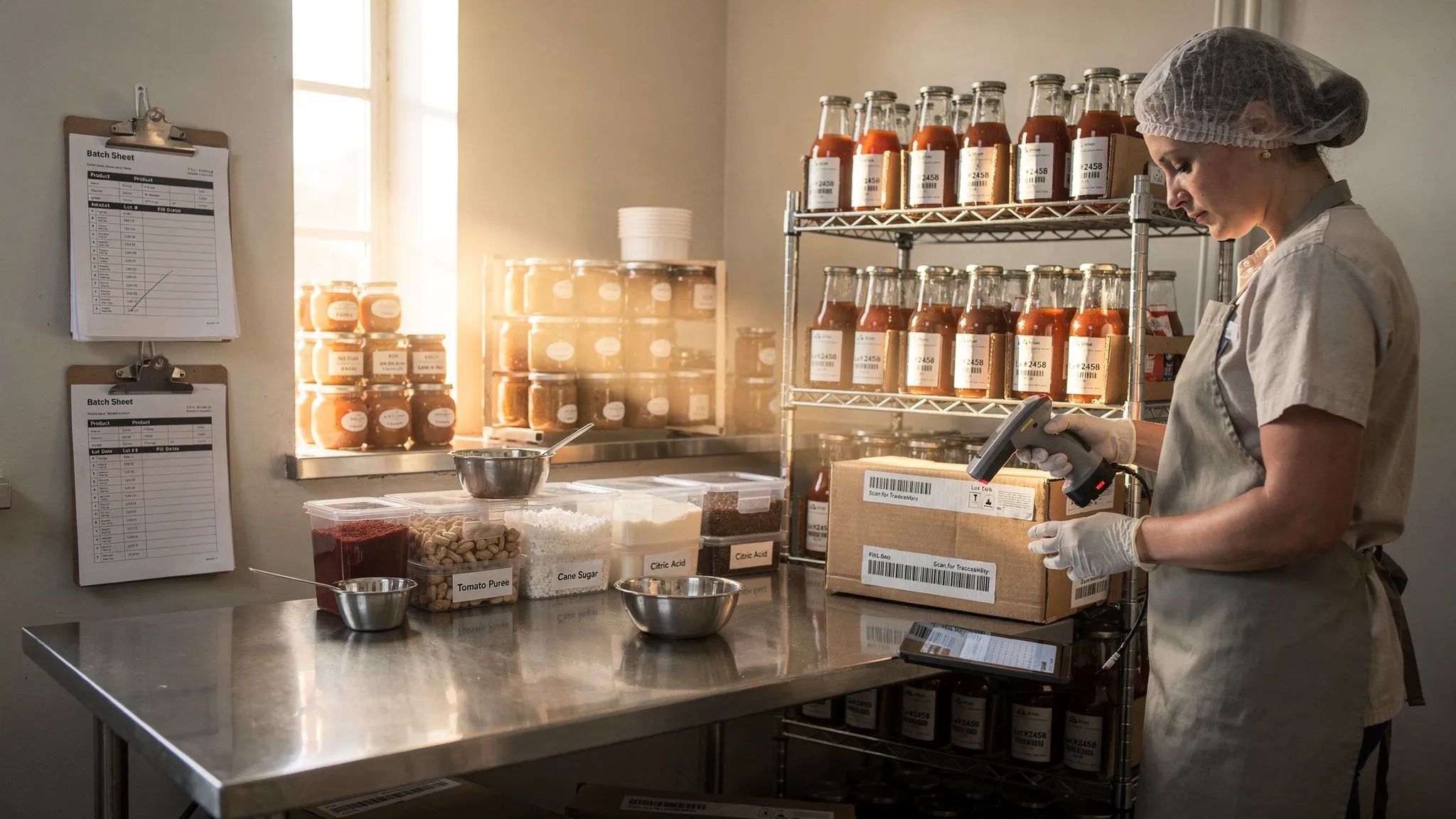
What effective batch production planning looks like
When order volume grows, planning needs to do four things reliably:
- Roll up recipes into the right number of batches, so you make what sells without overproducing.
- Translate batches into precise ingredient and packaging needs, so purchasing stays ahead.
- Reserve the right lots using FEFO (first expire, first out) so you cut waste and avoid last minute swaps.
- Keep a clean trail, so if an auditor or customer calls, you pull answers in minutes, not hours.
If any one of these steps is manual, or spread across tabs and clipboards, the whole day slows down.
Why spreadsheets buckle as you scale
Spreadsheets are flexible, you can design them to match your recipes and batch sheets. But as more people touch them, several problems creep in.
- Version drift, the Monday file is not the Friday file. Someone saved a copy, someone else pasted values over formulas.
- Silent errors, a broken SUM or a wrong unit can hide for weeks.
- No real time context, you cannot see expiries, open lots, or true on hand without bouncing to other sheets.
- No FEFO by default, you plan theoretically, then prep discovers the oldest lots were missed.
- Slow change, a new SKU or label tweak means redesigning tabs and checks.
None of this is your team's fault. This is exactly where small producers get stuck, between a production floor that moves fast and a planning tool that cannot.
The calm path, keep your workflow, upgrade the data
Batch Better digitizes your existing paper logs and spreadsheets, then turns them into traceable, recall ready inventory and planning data. You keep your recipes, your batch sheets, your clipboards. Intelligence runs in the background and feeds you the right numbers at the right time.
Here is how common planning jobs map to clean, low effort outcomes:
| Planning job | Real world headache | What helps | Batch Better feature |
|---|---|---|---|
| Convert orders into batch counts | Multiple SKUs, seasonal spikes, shared ingredients across products | Forecast likely demand and roll up recipes with realistic yields | Production forecasting, repurchase prediction, recipes, yield management |
| Build ingredient and packaging buy list | Broken formulas and unit mismatches create shortages or overbuys | Auto roll up BOMs, convert units, validate ranges | Recipes, automatic data validation, real time inventory tracking |
| Reserve the right lots for staging | FIFO picks the wrong cases, near expiry product gets missed | FEFO visibility at the lot level, with expiries front and center | Expiry and FEFO tracking, lot label scanning |
| Keep batches on cost | Ingredient swaps and yield surprises hide margin hits | See batch level costs with actual yields | Batch level costing, yield management |
| Hand the floor a clean plan | Prep loses time translating tabs into tasks | One click staging lists, pick lists, and run sheets | One click export reports |
| Trace a run for a customer or audit | Hunting through binders and separate sheets | Lot to batch to shipment in one view | Instant lot tracing, recall ready record keeping |
A simple weekly workflow that saves prep time
- Review upcoming demand and likely reorders, use repurchase prediction and recent sales to see what will move next, so you are not building blind.
- Convert orders into batch counts, select the SKUs to run, then let recipes and yield assumptions roll up exact ingredient and packaging needs.
- Check for gaps and expiries, the system flags shortages, near expiry lots, and out of range numbers before you print a single list.
- Reserve and export staging tasks, push one click pick lists and run sheets to the floor, with FEFO lots already selected and label counts ready.
- Run production and scan lots, as you stage and build, lot label scanning and real time inventory keep counts true without extra paperwork.
- Reconcile yields and costs, record actuals, let automatic data validation catch outliers, then see batch level costing with the true yield.
- Close the week and stay audit ready, export reports for purchasing, waste, and traceability, and know you can answer a recall drill fast.
A quick example
You plan three sauces and one seasonal beverage for the week. Two products share citrus, and caps for the beverage are tight. In Batch Better, forecasting highlights the beverage will likely reorder midweek, and FEFO shows a citrus lot expiring next week. You shift one sauce run to Monday to use that citrus, push the beverage to Wednesday when caps land, and export a clean staging list. No scramble, no wasted citrus, no late beverage orders.
Plan against reality, not a wish list
Most production plans fail where the numbers meet the floor. That is why live inventory, expiries, and actual yields matter more than a perfect spreadsheet model. Batch Better keeps those moving pieces in one place, so you can plan confidently without adding steps.
- Real time inventory tracking keeps you honest about what is truly on hand.
- Expiry and FEFO tracking turn near misses into smart picks.
- Yield management closes the loop between plan and actual, so next week's numbers are smarter.
Cut waste while you plan
Planning is the earliest and cheapest place to prevent waste. The simplest change is FEFO, first expire, first out, instead of FIFO. When lots and expiries are visible at planning time, you schedule runs that consume at risk inventory before it becomes a write off. That alone reduces rushed end of week rework and surprise scrap.
If your products are on the FDA Food Traceability List, or you sell to customers that expect traceability, clean lot selection is not only smart, it is necessary. The FDA's Food Traceability Final Rule, FSMA 204, requires a digital sortable spreadsheet within 24 hours for certain foods. Having instant lot tracing and recall ready records makes that conversation simple. You can read more on the FDA Food Traceability Final Rule.
What to track each week
You do not need a dashboard wall. A handful of signals will tell you if your batch production planning is saving prep time and margin.
| Metric | Why it matters | Where to see it |
|---|---|---|
| Plan vs actual yield by product | Tightens purchasing and schedule accuracy | Yield management, batch records |
| Ingredient and packaging shortages | Shows if planning is early enough | Real time inventory, export reports |
| Expiry risk consumed vs expired | Validates FEFO is working | Expiry and FEFO tracking |
| Waste and rework by reason | Targets the right fix, training, supplier, or process | One click export reports |
| Traceability drill time | Minutes to answer lot questions builds trust | Instant lot tracing |
Review these every Friday. If shortages trend down and expiry consumption trends up, your planning is buying you time on the floor.
Start small, keep momentum
You do not need a big rollout. Pick one product family, bring its recipes, batch sheets, and current inventory into Batch Better, and run next week's plan through it. Once the team sees cleaner staging lists and fewer questions at the table, the pull to expand will come from them.
- Keep your forms, Batch Better reads them and turns them into structured data.
- Keep your cadence, weekly planning, daily staging, end of week review.
- Grow when ready, add more SKUs, more sites, or more workflows at your pace.
Frequently Asked Questions
Do we need to change our batch sheets or recipes to get value? No. Batch Better is built to digitize the forms you already use, then layer traceability, FEFO, and planning data on top.
Can we start with one product line and expand later? Yes. Many teams start with a single family of SKUs to prove out planning and staging, then roll in the rest once the wins are clear.
What is the difference between FIFO and FEFO, and why should I care? FIFO moves the oldest received inventory first. FEFO moves the inventory that will expire first. For perishable ingredients and finished goods, FEFO cuts waste and last minute swaps.
How does Batch Better help with recalls or customer lot questions? Every batch, ingredient lot, and finished good lot stays linked. If a customer calls, you search once and export the answer in minutes.
We are comfortable in spreadsheets. Why change now? Spreadsheets will always have a place. The gap is real time, expiries, and error checks. Batch Better handles those parts for you, so the team plans and preps faster without rebuilding your tools.
Plan your next run with less stress
If batch production planning is stealing prep time, you do not need a new process, you need cleaner data and simple tools that fit the way you work. Turn your existing logs into live, traceable inventory and plan against reality, not a wish list. When the next rush hits, you will stage faster, buy earlier, and waste less.
Ready to see it in action, talk to Batch Better.