Your team makes food. Not spreadsheets. Yet every week, messy clipboards, lot codes in the margins, and last minute trace requests pull you away from production. Batch tracking with instant lot lookups turns that paperwork drag into a quick search and a clean export. No overhaul, no new dance on the floor. You keep your existing logs, labels, and flow. The intelligence works in the background and gives you answers when you need them.
What instant lot lookups feel like on a busy day
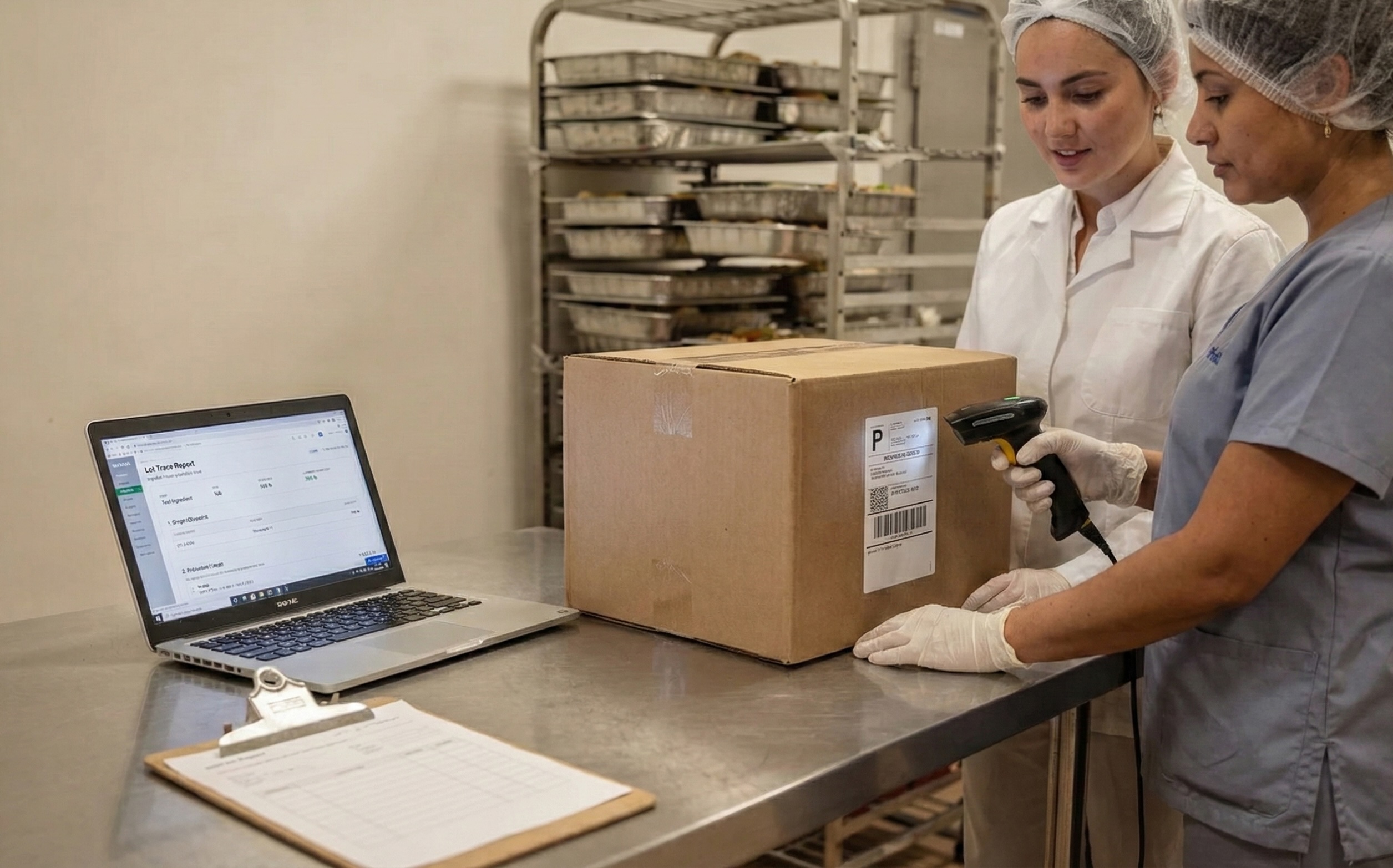
You get a call about a supplier issue, or QA wants a trace. You type or scan a lot code. In seconds, you see the full story of that lot across your operation. Where it came from, which batches used it, what remains on hand, and where finished goods went. You click Export and hand over an electronic, sortable spreadsheet that matches what FDA investigators expect to see.
That is the whole point. Fast answers, clean proof, minimal disruption.
Why the FDA asks for an electronic sortable sheet
Under the Food Traceability Final Rule, often called FSMA 204, covered firms must be able to provide traceability records to FDA quickly, in an electronic sortable spreadsheet when requested. The requirement is about speed and clarity. Investigators want a file they can filter by lot, date, location, and movement so they can follow the product flow without back and forth. See FDA's overview of the Food Traceability Final Rule and its FAQs on electronic sortable spreadsheets.
Batch Better gives you a one click export in that format. You do not need to rebuild your data model or rewrite your logs. The platform reads what you already capture, validates it, and assembles a clean, filterable sheet on demand.
What goes into a clean lot trace report
A solid trace export reads like a timeline. It links lots to movements with dates, quantities, and locations. Your exact columns depend on your products and process, but the core looks like this:
| FSMA Term | Why it matters | Example entry |
|---|---|---|
| Traceability Lot Code (TLC) | The unique ID of the product moving. Must not change during shipping. | PESTO-251224 |
| Event Type (CTE) | The FSMA-defined action. | Shipping |
| Date & Time | When the product physically left your dock. | 2025-12-25 14:00 |
| Product Description | Detailed description including packaging/brand. | Basil Pesto, 8 oz jar |
| Quantity & Unit | Exact amount shipped. | 50 Cases |
| Source Location (IPS) | Backward Trace: Who sent the goods to you (for Ingredients). | N/A for Shipping |
| Destination Location (ISR) | Forward Trace: The physical address of the customer receiving the goods. | Whole Foods Dist, 123 Market St, TX |
| Ref. Document Type & # | The record linking the shipment (e.g., BOL). | Bill of Lading #98765 |
| TLC Source | The location that originally assigned the Lot Code (You, if you made it). | Your Plant Name, 123 Mfg Dr |
| Linked TLC (Inputs) | For Transformation: Links ingredients used to create this finished lot. | Basil-Lot-101, Oil-Lot-202 |
With Batch Better, you press Export and this information lands in a sortable spreadsheet that matches the request. Investigators filter by lot code, QA filters by date, your team filters by location. Everyone gets what they need without hunting through binders.
The unlock: batch level insight, not just lot lists
Instant lot lookups are only possible when inventory is tracked at the batch level, not just as a daily tally. Batch Better builds this insight from the records you already keep.
- Accurate traceability: Inputs, batches, and shipments are linked, which means you can trace forward and backward from any lot.
- Expiration tracking: Each lot carries its date, so you see true aging and can run FEFO without manual counting.
- Batch level costing: When batches link to inputs and yields, you see cost per batch and per case, which helps you price and plan with confidence.
This is the same data model that powers recall ready reporting, more accurate production plans, and simpler audits.
How it works without changing your floor routines
The hard part of digital traceability has always been the gap between real life and rigid systems. Pens run out of ink. Labels get smudged. A rush order pushes a step to the side. Batch Better is designed for these realities.
- AI powered data extraction: Snap or upload your existing paper logs. The platform reads the lots, dates, and quantities, then checks for gaps.
- Lot label scanning: Keep using the labels you print today. Scan barcodes or text to pull up the lot instantly.
- Automatic data validation: Catch mismatches early, such as an ingredient lot used after its expiry or a shipment quantity that exceeds production.
- Real time inventory tracking: As batches move, your counts update. That means your lookup shows what is truly on hand right now.
No new clipboard layouts, no week long retraining. You get digital records without the slowdown.
From audit request to export, step by step
Here is what a typical fire drill looks like once you have instant lot lookups:
- You receive the lot in question. You scan or type it into the search.
- You see all batches that consumed the lot, plus finished goods produced from those batches.
- You see where finished lots went, which customers received them, and what remains in inventory.
- You click Export to generate the FDA electronic sortable spreadsheet and send it along. If needed, you add a note and rerun the export filtered to a specific date range or location.
This end to end response takes minutes, not days of chasing clipboards.
Expiration and FEFO that actually stick
FEFO falls apart when dates live on boxes and not in your system. With batch level tracking, every lot has a date you can sort by, and every location shows aging at a glance. That means you can:
- Spot short dated inventory before it becomes waste.
- Route near dated lots to faster channels.
- Set simple rules so pick lists favor the right lots.
The result is fewer write offs and tighter margins, all by using the dates you are already writing on your logs and labels.
Costing that respects how you really produce
Spreadsheet costing often assumes perfect yields and tidy conversions. Real life does not. Batch level costing ties actual inputs, yields, and rework to each run, so you see true cost per batch and per case. When ingredient prices spike or yields dip, you notice early and adjust pricing or schedules before the month gets away from you.
Planning with better ground truth
Once your batches and lots live in a single, validated timeline, forecasting becomes more practical.
- Production forecasting: See what you will run short on based on sales and aging inventory, then schedule runs that fit your capacity.
- Repurchase prediction: Use real movement history to reorder inputs on time, not based on guesswork.
The same dataset that powers instant lot lookups pays for itself in less waste, fewer rush orders, and fewer overtime pivots.
Quick start to stronger batch tracking
You do not need a long project plan to get value. A simple, focused rollout works best.
- Keep your logs. Start scanning or uploading them so the system can build your history.
- Standardize the lot code spot on each form and label. Consistency beats complexity.
- Capture the three movements that matter most, receiving, producing, and shipping. You can add more detail later.
- Test a trace. Pick a recent lot and run a full forward and backward trace, then export the sortable sheet and share it with QA so everyone sees what good looks like.
Make this a regular pattern. If your team prefers direct digital data entry at any of the three points (receiving, production, shipping) you can enter the information digitally as well. Batch Better is designed to work the way your team works best.
Frequently asked questions
What does the FDA mean by an electronic sortable spreadsheet?
It is a file you can sort and filter by columns such as lot, date, and location. Under the Food Traceability Final Rule, the FDA can request your traceability records in this format, and you must provide them within 24 hours. See the FDA's official resources for details.
Do I need to replace my forms or labels to use Batch Better?
No. Batch Better is built to read your existing logs and labels. You can modernize your traceability without rewriting your floor routine.
How fast can I generate a lot trace report?
In most cases, it is a search and a click. You look up the lot, review the on screen trace, then export the FDA ready spreadsheet in one step.
Will this help with everyday waste, not just recalls?
Yes. Because batches carry expiration dates and quantities, you can spot near dated inventory and run FEFO with confidence, which reduces write offs.
How does batch level costing work here?
Inputs, yields, and movements link to each batch, which gives you a real cost per batch and per case. You see the impact of ingredient prices and yield changes without rebuilding your spreadsheet every week.
Can my small team keep up with the data entry?
The platform minimizes typing. It extracts data from the logs you already create, validates it, and lets you scan labels to find lots fast.
The calm way to stay recall ready
You care about flavor, texture, and consistency. Paperwork should not get in the way. With instant lot lookups and one click exports in the FDA's required electronic sortable sheet format, you stay audit and recall ready without changing how you produce. You also get expiration tracking and batch level costing as part of the same flow, which means stronger margins and fewer headaches.
Ready to cut the paperwork drag without changing your kitchen routine? See how it works at Batch Better.