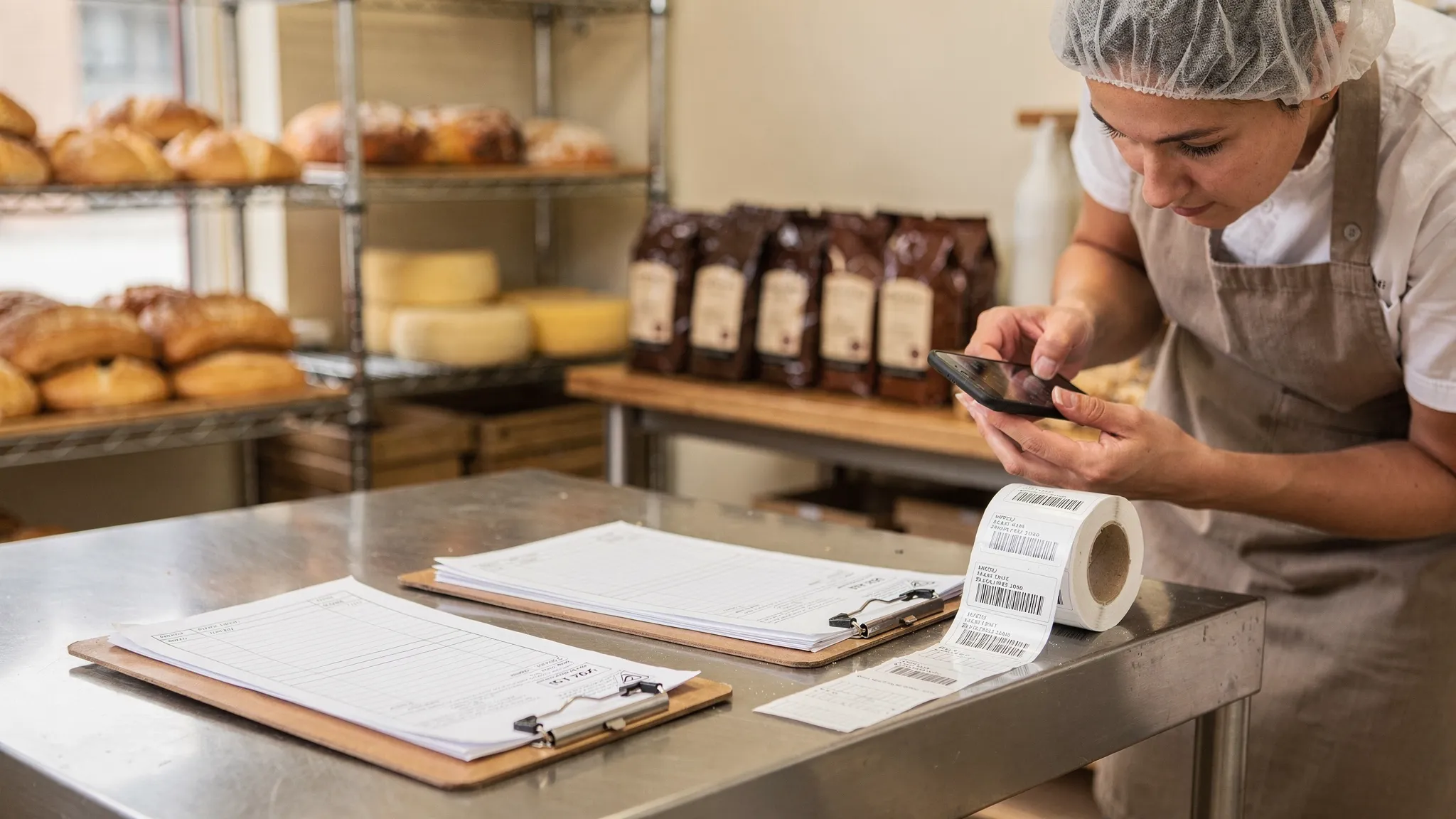
There is a calmer, simpler path. Keep your exact paper forms, keep your current workflow, and let those sheets create traceable, recall-ready inventory data in the background. No big change on the floor. Just fewer fire drills, less waste, and faster answers when someone asks, what lots went where?
The pile works, but it is quietly taxing your margin
Paper forms are familiar. They mostly pass audits and satisfy procedures. The cost shows up elsewhere.
- Slow tracing turns a minor quality issue into a day of hunting through binders.
- No real-time lot balances means over-ordering or late rush orders, both eat margin.
- First in, first out becomes wishful thinking without expiry visibility, so product ages out on the shelf.
- Double entry steals hours, writing on paper, then typing into spreadsheets.
Industry studies show recalls can run into millions in direct costs. The speed and precision of your lot records are the difference between a tight, targeted response and a broad, expensive one. The point is not fear. The point is control.
For most small producers, the fastest way to gain control is to turn the paperwork you already do into live inventory data.
Keep your paper, get the data
You do not need to redesign forms or retrain your team. You keep using the same receiving sheets, batch records, temp logs, and packing lists. After you fill them out, you capture them once. That capture, a scan or a photo, becomes structured data that feeds your inventory, traceability, and reports.
Here is what that mapping looks like in practice:
| Paper form or label | Fields on the page | What becomes data |
|---|---|---|
| Receiving log | supplier, item, lot code, quantity, best by | auto-create or update item and lot, on-hand quantity, expiry date for FEFO |
| Batch sheet | batch ID, ingredient lots, yields, hold notes | decrement ingredient lots, create finished goods batches, batch-level costing |
| CCP or temp log | time, temp, initials, corrective action | validation record linked to batch and lot, holds if out of spec |
| Packaging label | lot code, date code | link physical labels to inventory lots for instant scan and trace |
| Shipping log | customer, PO, shipped lots, quantities | trace forward to customers, one-click export for recall letters |
With Batch Better, AI does the extraction in the background and automatic data validation checks for missing dates, unreadable lot codes, or quantity mismatches. If something looks off, you get a clear prompt to fix it, not a mystery number weeks later.
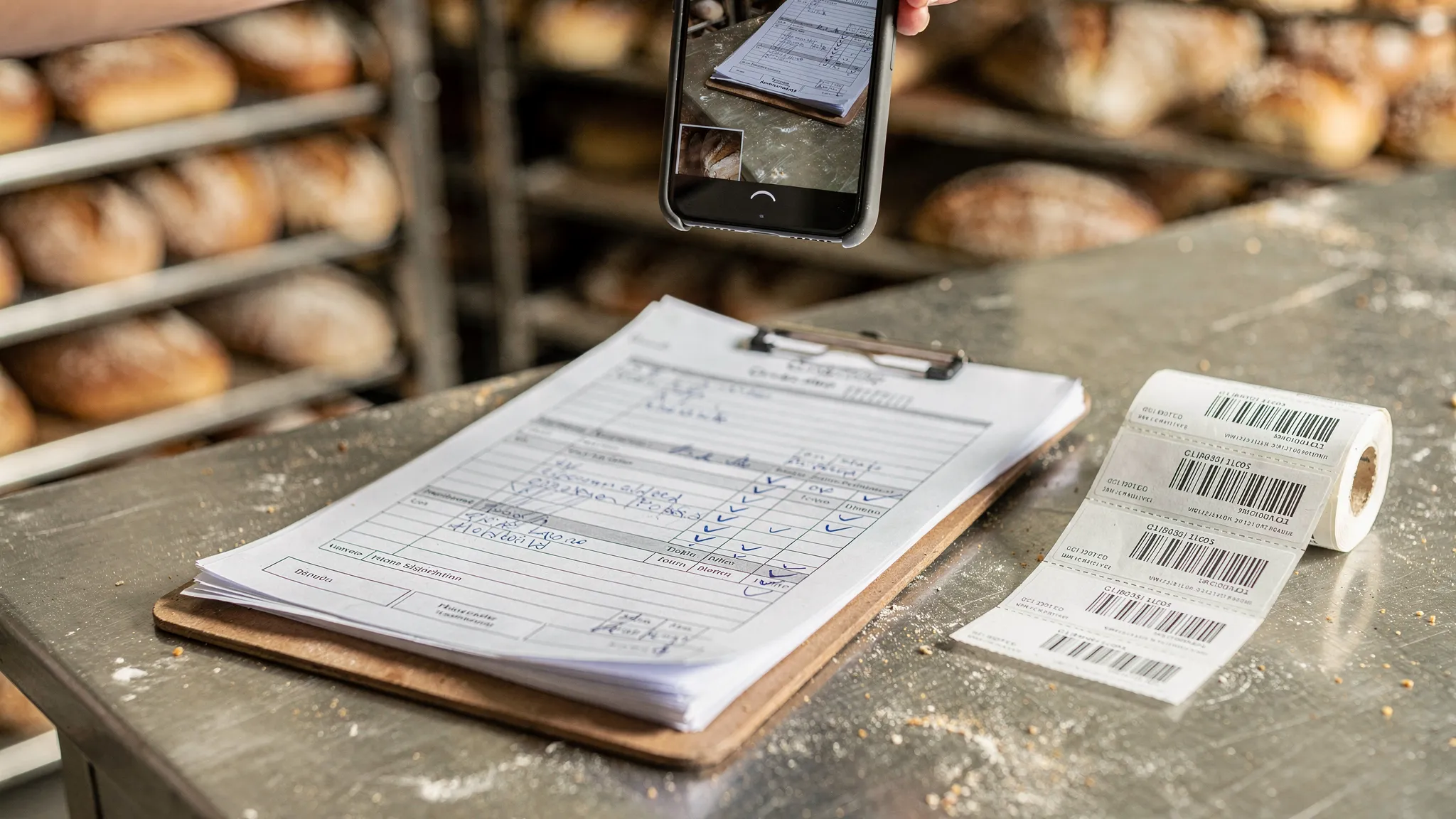
What feeding your inventory looks like, day to day
- A delivery hits the dock. You fill the receiving form like always. Capture it once, and the lot, quantity, and best by date appear in inventory with FEFO tracking.
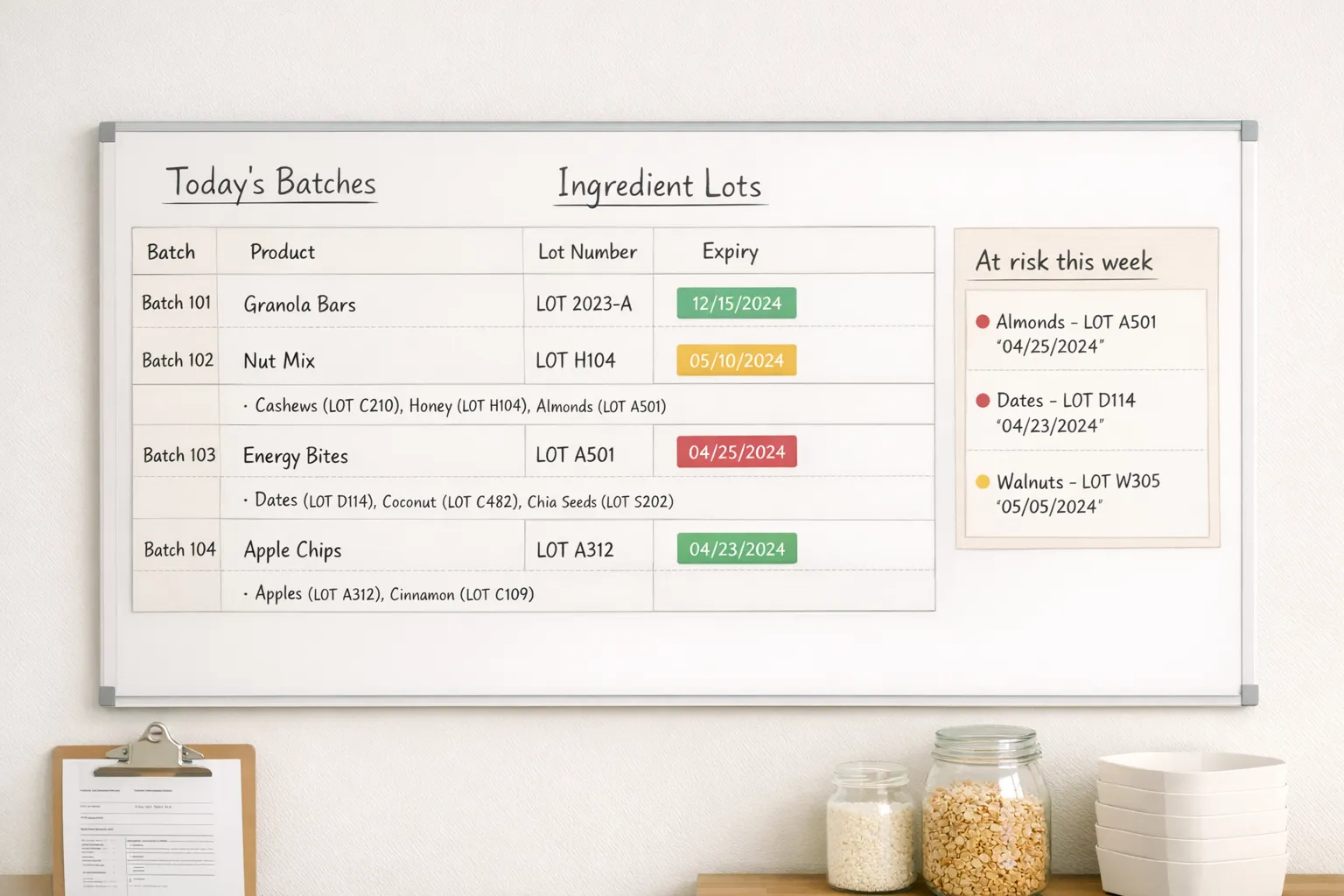
- You run today's batches. As you finish the batch sheet, the system ties the ingredient lots to the finished goods, calculates batch cost at the lot level, and updates what is available to sell.
- Staff can scan a lot label when packing, so every case tied to a shipment is traceable in seconds.
- Ageing stock shows up before it goes out of date, so you can discount, donate, or prioritize those lots first.
- If you get a quality complaint on lot LJ-1025, you type the lot number. You see exactly which batches used it, who bought them, and what remains on hand. You can export the trace report with one click.
None of this requires changing how your team writes on paper. The value arrives after the form is filled.
Food safety and audits without the scramble
Paper satisfies record-keeping. Digital structure makes it recall-ready. When your forms become data, you can:
- Trace back and forward by lot instantly.
- Export clean PDFs or spreadsheets for your certifier or inspector without printing a binder.
The FDA's Food Traceability Final Rule, often called FSMA 204, sets clear expectations for faster, more accurate traceability records, with a compliance date in January 2026 for most covered entities. If you need a refresher, the FDA's overview is here: Food Traceability Final Rule. Turning your existing paper into searchable, structured data puts you on stronger footing for that future without upending your shop today.
Validation that protects your numbers
Inventory is only as good as the data that feeds it. Automatic checks keep garbage out so the floor can move fast without babysitting a screen.
- Required fields: if the date, lot code, or quantity is missing, you get a prompt to complete it.
- Logical cross-checks: quantities on the receiving form match the label and the on-hand change, expiry dates make sense, and temperatures meet limits.
- Lot label scanning: scan to eliminate transcription errors and tie physical labels to digital lots.
The aim is simple: fewer surprises on count day and fewer corrections during audits.
Plan production with facts, not gut alone
Once paper forms flow into inventory, the numbers start working for you. You can see true on-hand inventory by lot, what is reserved for open orders, what is nearing expiry, and what actually moved last week. That visibility unlocks smarter decisions.
- Build runs based on FEFO and open demand, not guesses.
- See batch-level costing so you can adjust pack sizes or ingredient choices before margin erodes.
- Use repurchase prediction and production forecasting to make the right amount of the right items more often, especially for your fast movers.
Better planning reduces waste, rush fees, and weekend overtime. It is the easiest way to find margin points you already earned in the kitchen.
Start small, prove value in a week
You do not need a big rollout. Pick one product family and two forms, for example receiving logs and batch sheets. Run your normal process for a few days and capture those pages. Review the live inventory and traceability they create.
What to look for in the first pass:
- Did quantities and expiry dates match reality without extra typing?
- Can you trace a finished lot back to every ingredient lot in seconds?
- Are any items closer to expiry than you thought, and can you act on that now?
- How much paper-to-spreadsheet time disappeared this week?
When the basics are feeding your inventory cleanly, add packing lists or shipping logs. You grow the impact at your pace.
Why this approach pays for itself
You do not need an enterprise system to get enterprise-grade inventory management. You need your real-world process to create clean data with almost no extra effort.
Consider a conservative example:
- If your team spends an hour a week retyping paper into spreadsheets, that is roughly 4 hours a month you can give back to production and sales.
- Preventing just a few cases from expiring each month by acting on FEFO pays for the capture time several times over.
- A targeted, same-day trace saves hours of staff time and protects relationships with accounts during an issue.
Small improvements compound. The result is less waste, faster turns, and more confident growth.
Where Batch Better fits
Batch Better digitizes paper logs for small food producers and turns them into traceable, recall-ready inventory data without changing how you run the floor. Under the hood, you get:
- AI-powered data extraction that reads your forms.
- Recall-ready record keeping with instant lot tracing.
- Real-time inventory, expiry, and FEFO tracking.
- Automatic data validation so errors do not creep in.
- One-click export reports for auditors, buyers, or certifiers.
- Lot label scanning for speed and accuracy.
- Batch-level costing, repurchase prediction, and production forecasting to support growth.
The promise is practical, your paperwork keeps you compliant, and now it feeds your inventory too.
Frequently Asked Questions
Do we need to redesign our paper forms? No. The fastest path is to keep your current forms. You capture them once after they are filled out, and the system maps the fields to inventory data.
What if handwriting is messy or a photo is not perfect? Automatic validation flags unreadable entries or missing fields so you can fix them quickly. You keep control of the final record.
How does this help with FEFO? Expiry dates from receiving logs and labels become data. The system highlights lots approaching expiry and prioritizes them in planning and packing.
Will this slow down the floor? No. The capture happens after your team finishes the form. There is no need to stop production to type into a screen.
Can I trace a lot forward to customers and back to suppliers? Yes. When paper forms become structured records, you can trace back to ingredient lots and forward to shipped customers in seconds and export that report when needed.
What about FSMA 204? The Food Traceability Final Rule raises the bar on speed and accuracy of trace records, with a compliance date in January 2026 for most covered entities. Turning your existing paper into searchable, structured data prepares you without a major process change. Read the FDA overview here, Food Traceability Final Rule.
How quickly can we see results? Most teams see value in the first week by starting with a small set of forms. You will notice cleaner counts, faster lot lookups, and fewer surprises around expiry.
Turn your paper into recall-ready inventory
If you are ready for the relief of fewer piles and faster answers, take the next step. Keep your clipboards, keep your forms, and let them work harder for you.
See how it works at Batch Better.